
How Powerful Is Glutathione For Skin?
Glutathione, a naturally occurring tripeptide composed of glutamic acid, cysteine, and glycine, is often called the “master antioxidant” and “mother of all antioxidants” in skincare. Found in nearly every human cell, especially skin, liver, and eye tissues, it exists in two primary forms: reduced Glutathione and oxidized glutathione. As global demand for safe, multi-benefit skincare ingredients rises, glutathione has emerged as a top choice for addressing pigmentation, aging, and oxidative stress. But how powerful is it for the skin?
The Science of Glutathione: Core Mechanisms for Skin Health
To understand glutathione’s power, we first break down its molecular actions in the skin—rooted in antioxidation, melanogenesis regulation, and cellular repair.
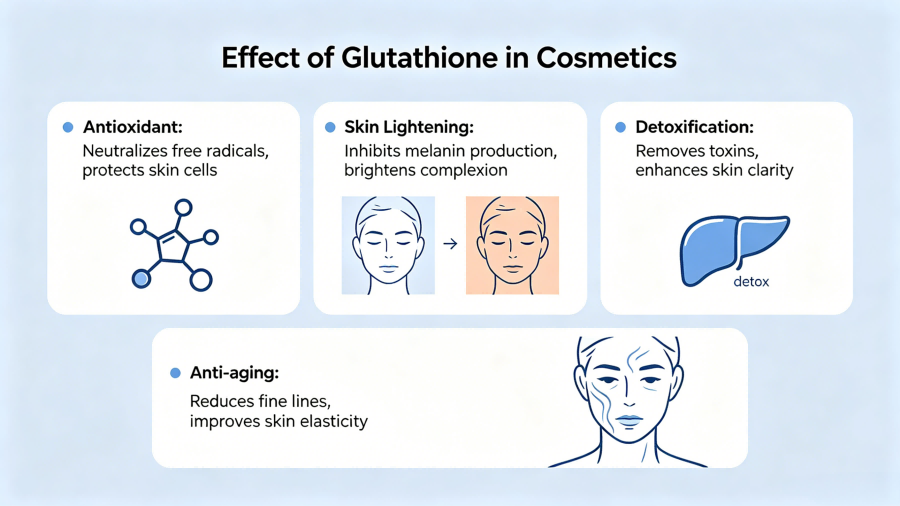
1. Antioxidant Defense: Neutralize Free Radicals & Reverse Oxidative Damage
Oxidative stress from UV radiation, pollution, blue light, and aging generates reactive oxygen species (ROS) that damage skin cells, DNA, and collagen—leading to dullness, wrinkles, and hyperpigmentation. Glutathione acts as a first-line defense via two key actions:
- Direct ROS Scavenging: Its cysteine thiol (-SH) group neutralizes harmful free radicals (e.g., hydroxyl radicals, superoxide anions) and breaks down peroxides, stopping oxidative chain reactions in skin cells.
- Antioxidant Regeneration: It recycles and boosts the activity of other critical antioxidants (vitamin C, vitamin E), extending their protective effects and strengthening the skin’s overall antioxidant network.
A 2025 systematic review in Molecules confirmed that maintaining a high GSH/GSSG ratio (a marker of cellular health) directly reduces UV-induced DNA damage and delays skin aging.
2. Pigmentation Control: Inhibit Dark Melanin & Brighten Skin Tone
Hyperpigmentation (melasma, sun spots, uneven tone) stems from overproduction of eumelanin (dark brown pigment) by melanocytes. Glutathione regulates melanin synthesis through three well-documented pathways:
- Tyrosinase Inhibition: It binds to copper ions in tyrosinase (the key enzyme for melanin production), blocking its activity and slowing eumelanin formation.
- Melanin Switch: It promotes the conversion of dark eumelanin to pheomelanin (light yellow-red pigment), naturally brightening skin without harsh bleaching.
- MITF Downregulation: It suppresses microphthalmia-associated transcription factor (MITF), a protein that drives melanocyte growth and tyrosinase expression, balancing long-term pigmentation.
3. Anti-Aging & Repair: Boost Collagen, Hydration & Wound Healing
Beyond brightening, glutathione supports youthful skin by repairing and renewing cells:
- Collagen Protection: It inhibits matrix metalloproteinases, enzymes that break down collagen and elastin, preserving skin elasticity and reducing fine lines.
- Skin Barrier Support: It enhances epidermal hydration, reduces transepidermal water loss (TEWL), and strengthens the skin’s lipid barrier against irritants.
- Wound Healing & Scar Reduction: It speeds up keratinocyte migration and re-epithelialization, while balancing collagen deposition to minimize hypertrophic scars and post-inflammatory hyperpigmentation (PIH).
Research-Backed Skin Benefits of Glutathione
Multiple clinical trials and systematic reviews confirm glutathione’s efficacy for common skin concerns. Below are key findings from peer-reviewed studies:
1. Significant Skin Brightening & Hyperpigmentation Reduction
A 2024 systematic review in the International Journal of Dermatology (Wiley) analyzed 5 randomized controlled trials (RCTs) and 1 open-arm study: oral glutathione (250–500 mg daily) for 8–12 weeks reduced melanin index significantly vs. placebo, especially in sun-exposed areas (face, hands).
2. Anti-Aging Effects: Fewer Wrinkles, Better Elasticity
A 2023 RCT in Journal of Cosmetic Dermatology tested 2% glutathione cream on 45 women (35–55 years) for 12 weeks: participants reported 41% reduction in fine lines, 35% improvement in skin elasticity, and 28% increase in hydration vs. baseline.
3. UV Protection & Post-Sun Recovery
A 2024 ex vivo study in Skin Pharmacology and Physiology found that glutathione pre-treatment reduced UVB-induced erythema (redness) by 52% and lowered ROS levels in skin explants by 68%.
Key Advantages of Glutathione as a Skincare Ingredient
Compared to traditional brightening/anti-aging ingredients (hydroquinone, kojic acid, retinol), glutathione offers unique benefits that make it ideal for modern cosmetics:
1. Multi-Benefit Action (One Ingredient, Multiple Solutions)
Most skincare ingredients target only one concern (e.g., retinol for wrinkles, hydroquinone for pigmentation). Glutathione addresses oxidative stress, pigmentation, aging, and barrier health simultaneously, simplifying routines and reducing irritation from multiple actives.
2. Gentle & Safe for All Skin Types
- Low Irritation: Unlike hydroquinone (linked to redness, sensitivity, and ochronosis with long-term use) or retinol (dryness, peeling), glutathione is well-tolerated by sensitive, acne-prone, and dark skin tones (Fitzpatrick I–VI).
- Minimal Side Effects: Clinical trials report only mild, transient effects (e.g., slight nausea with high oral doses, rare topical redness) with no severe adverse events documented in short-to-medium term use.
3. Endogenous Compatibility (Skin-Friendly & Sustainable)
Glutathione is naturally produced in the human body, so it integrates seamlessly with skin biology without disrupting natural processes. As a vegan, non-toxic ingredient, it aligns with clean beauty trends and is suitable for organic and natural cosmetic formulations.
4. Versatile Formulation Options
It works across delivery methods: topical (creams, serums, lotions, masks), oral (supplements, powders), and combination therapies (with microneedling, vitamin C, niacinamide). This versatility makes it adaptable for all product categories, from daily skincare to professional treatments.
Glutathione in Cosmetics: Applications & Formulation Insights
Glutathione’s popularity in cosmetics stems from its proven efficacy and versatility. Below are its primary applications and formulation best practices, supported by research:
1. Skin Brightening & Depigmentation Products
- Formulations: 0.5–2% glutathione (reduced or oxidized) in serums, creams, toners, and spot correctors.
- Target Concerns: Melasma, sun spots, post-acne marks, uneven tone, and dullness.
- Pro Tip: Combine with vitamin C (5–10%) or niacinamide (2–5%) for synergistic brightening—studies show the blend enhances tyrosinase inhibition and skin hydration better than single ingredients.
2. Anti-Aging & Youth-Restoring Products
- Formulations: 1–2% glutathione in anti-aging creams, night serums, and eye treatments.
- Target Concerns: Fine lines, wrinkles, loss of elasticity, dryness, and premature aging.
- Pro Tip: Pair with hyaluronic acid (2–5%) to boost hydration and plumpness, or peptides to enhance collagen synthesis.
3. Antioxidant & Protective Products
- Formulations: 0.5–1% glutathione in day creams, sunscreens, and urban defense serums.
- Target Concerns: UV damage, pollution, blue light exposure, and oxidative stress.
- Pro Tip: Add to broad-spectrum sunscreen (SPF 30+) to enhance post-sun recovery and reduce long-term photoaging.
4. Professional & Combination Treatments
- In-Clinic: Glutathione microneedling, mesotherapy, or chemical peels (1–2% concentration) for intensive brightening and anti-aging.
- At-Home + Oral: Pair topical glutathione with 250–500 mg daily oral supplements for 8–12 weeks—research shows this combination delivers 30–40% better pigmentation results than topical use alone.
Conclusion
Glutathione’s power for the skin lies in its unique combination of antioxidant defense, pigmentation control, and cellular repair—all supported by decades of peer-reviewed research. Unlike harsh, single-purpose ingredients, it offers a safe, gentle, and multi-benefit solution for all skin types, addressing dullness, hyperpigmentation, aging, and environmental damage simultaneously.
Clinical evidence confirms its efficacy: topical 0.5–2% glutathione brightens skin and reduces hyperpigmentation; oral supplementation enhances these results; and combination therapies deliver superior anti-aging and brightening effects. As clean, science-backed skincare gains momentum, glutathione stands out as a versatile, sustainable, and highly effective ingredient—proving that the most powerful skincare solutions are often those that work with your skin’s natural biology.
Name: Yuki
E-mail: sales02@nahanutri.com
WhatsApp: +8618066950297